Intent
Requirements, intended use, variables, constraints, interfaces, units, and engineering rationale.
 AeroGalactica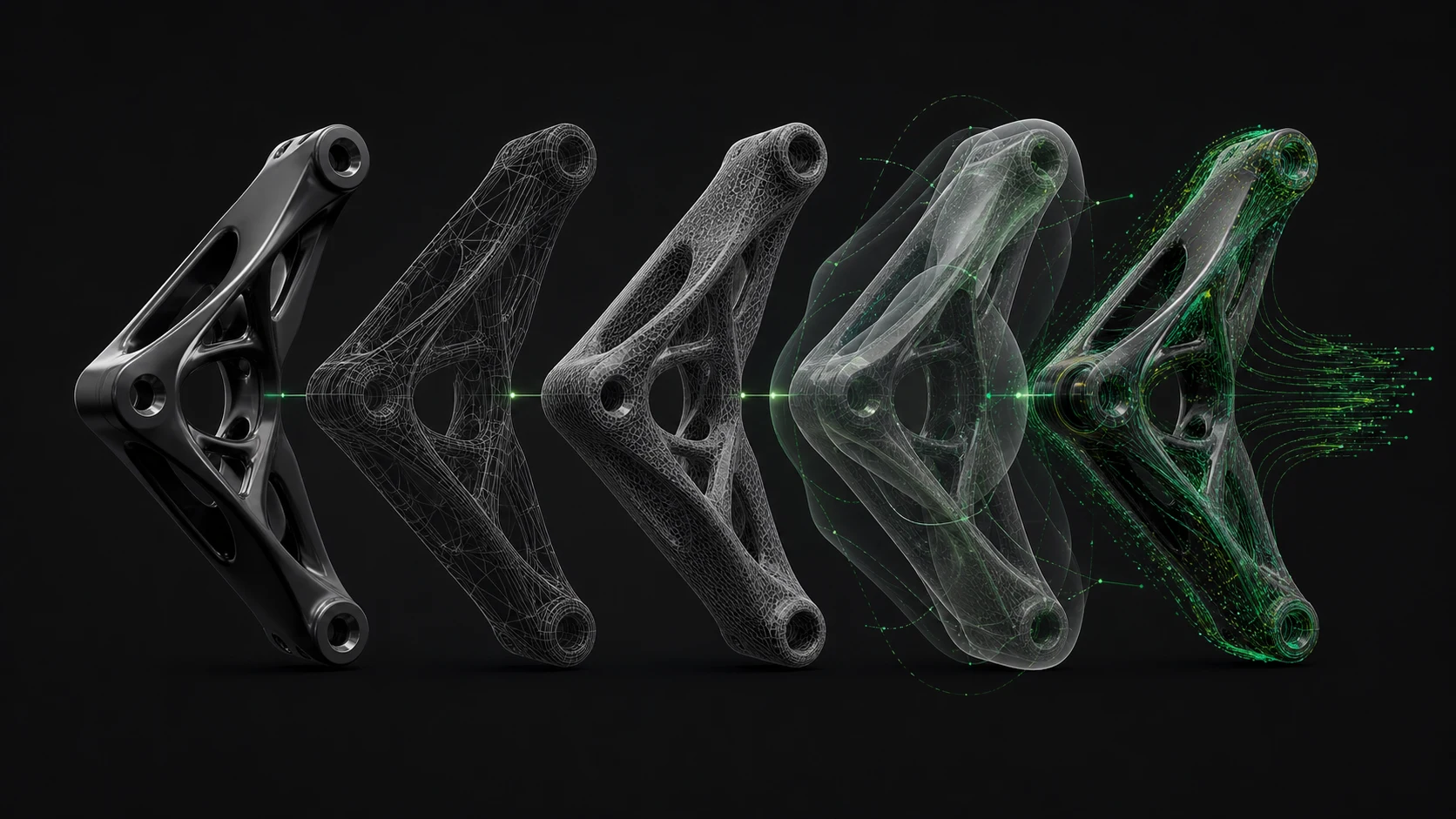
Computational engineering models
A long-term ambition, built through qualified aerospace workflows
The model is broader than AI and more durable than any single tool.
A computational engineering model carries enough logic to move from requirements and variables to geometry, physical setup, manufacturing intent, analysis, uncertainty, and evidence. AeroGalactica starts by proving that model in governed aerospace design loops, while keeping every workflow inspectable, executable, versioned, and bounded by what has actually been qualified.
System logic
Requirements, intended use, variables, constraints, interfaces, units, and engineering rationale.
Deterministic logic that creates geometry, materials, fields, assemblies, and manufacturing features.
Versioned lowerings into simulation, optimization, manufacturing, visualization, and experiment workflows.
Validation, uncertainty, provenance, test outcomes, model corrections, and the basis for each decision.
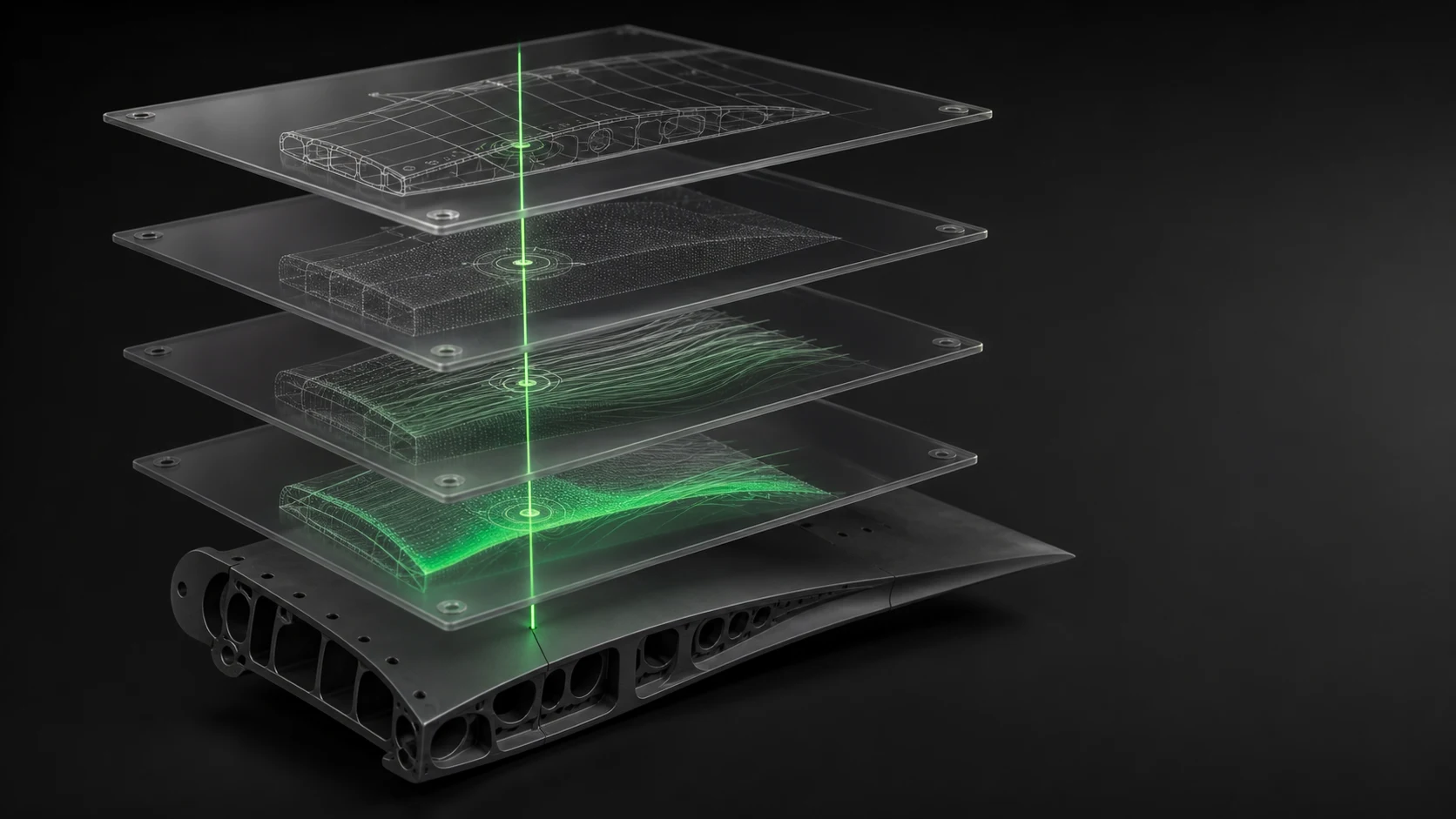
The same model principles can connect complex internal passages, high-speed external flow, structures, propulsion, controls, and mission constraints.
Geometry, electromagnetics, thermal-fluid behavior, materials, structural loads, maintenance access, and economics can become one coupled design space.
As reasoning and generative systems improve, a typed engineering model gives them a rigorous substrate for proposing, executing, checking, and learning from physical designs.
We believe this can become a universal computational engineering model: a common system for designing physical technology across domains without erasing the physics, evidence, or human authority that make the result trustworthy.
Continue through the system